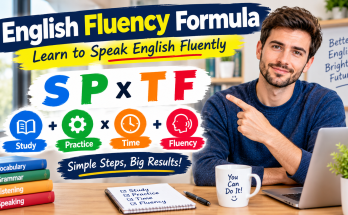
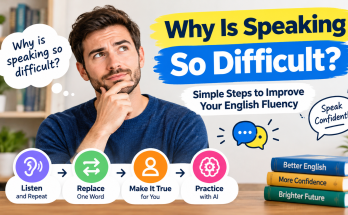
How can you complete, native speakers when they speak so fast in everyday talk, and films? Let’s find out with this one simple hack. Bright optimistic, music. Welcome! Hello, it’s Keith from the Keith Speakinga school, and this YouTube channel, English Speaking Success, here to help you develop your English speaking skills so you can become a confident speaker of English.
Many Students Struggle to complete born somewhere, Speakers of English
Now, you know, many students struggle to understand native speakers of English. “Just gimme a call anytime to FaceTime.” Indistinct. “We’ll sort into a text.” Alright, and I feel for them, because they’ve taken time to learn English, to build their knowledge of English, and they’ve done lots of reading and built up their vocabulary, but when it comes to understanding native speakers, they still find it difficult. Maybe this is you.
One Simple Hack
One of the reasons you may still find it difficult is possibly because you think native speakers pronounce words one by one or that they pronounce them the way that they’re written. However, some advanced students who fully understand native speakers, they know that this is not true. There is one simple hack that they understand and practice, and now you can too. Laughs.
Native Speakers of English Contract Words
The hack is understanding that advanced or native speakers of English contract words, and if you can master recognizing the most common contractions, this will take your listening skills up to a whole new level. So in this video, I will test your listening skills and I’ll show you how some of the most common contractions work so that you can recognize them and improve your listening skills.
A PDF of All of This Information
Oh, and at the end of the video, I’ll also give you some tips about how you can actually implement this in your everyday listening skills. Okay, sound good? Let’s do it! Graphics whooshing. Oh, and just to let you know, there is a PDF of all of this information that you can download for free. Just click on the link in the description below. Okay, sound good? Let’s do it!
To Contract Means to Make Smaller
Common contractions. Graphics whooshing. Okay, so to contract, contract as a verb, right, not contract, which is a noun, like a work contract. To contract means to make smaller. So in spoken English, this is where two words become one, smaller, right? And as we’regeneral speech, about listening skills, more importantly, the two words become one sound, one sound, and it’s really important to learn how to hear these sounds and to know what they mean when you hear them.
Four or Five of the Most Common Ones
So let’s go through four or five of the most common ones. What we’ll do is I will say the sound and I want you to write down or imagine in your head what are the two words. If you have pen and paper, you can write it down. Pen and paper? What century do you live in, Keith? Keith laughs. Okay, are you ready?
The First One: Aren’t
The first one: aren’t, aren’t. Okay, and this is the contraction of “are not.” Are not, aren’t. A lot of my Spanish friends here, even though they know the contraction, they say “aren’t, aren’t,” with that “re,” aren’t. But look at the phonetics. It’s “ant, ant.” It’s a bit like “arm, arm,” but change the “m” for a “nuh”: arn, arn, aren’t. And you can put the “t” on the end: aren’t.
We Drop the “t” Sound
What’s interesting is most of the time, actually, that “t” disappears. We drop the “t” sound, so it’s arn, arn. Okay, are not. For example, “they aren’t coming.” Actually, we say “they aren’t coming,” “they aren’t coming,” aren’t coming. The “t” becomes a glottal stop: aren’t coming. But when you hear that, “they aren’t coming,” aren’t, chuckles, with a “nuh,” “they aren’t coming,” you know that it’s “are not.”
The “t” Will Be Pronounced
Okay, “they aren’t coming.” The “t” will be pronounced, particularly if the next word begins with a vowel or a vowel sound. For example, “I’m late, aren’t I?” Aren’t I? Interesting, the “I am” in the question tag is “aren’t I?” “I’m late, aren’t I?” You can hear that linking there. Okay, that’s the first one.
Number Two: She’s
Number two: she’s, she’s. Okay, this is “she is” or “she has.” Both of them are she’s. Actually, it can also be she’s. It can be a “eh” or a “ee.” You can see in the phonetics it can be shiz or she’s. Both of them are used. Probably shiz is more common, I think, ’cause it’s more commonly not stressed.
“She Is” or “She Has”
So this can be “she is” or “she has.” For example, “she’s angry.” Can you hear the she’s, she’s, she’s angry, she’s angry, bit like Shazam, she’s angry, as “has,” “she’s got blue eyes,” “she’s got blue eyes,” she’s, she’s, she’s got blue eyes. You can hear that shiz, shiz sound, right? That’s the sound you want to be looking for. Forget about “she has.” Forget it. She’s, she’s got blue eyes.
“He Is” or “He Has”
Okay, now interestingly, it’s the same with “he is” or “he has”: he’s, he’s, he’s angry, he’s got blue eyes. Even more interesting is, with “he,” we actually often drop the “huh,” the “h” sound, so it’s not even “he’s,” it’s iz, iz. He’s angry, he’s got blue eyes, he’s angry, he’s angry, he’s got blue eyes. Can you hear the iz sound? And when you start changing your mindset about “he is” to iz, iz, then you’re gonna start improving your listening skills. Great!
“I Will”: I’ll
Next one, ready? I’ll, I’ll. So this is “I will”: I’ll. Sometimes it’s made even shorter: ill, ill. So instead of “I will help you,” you may hear “I’ll help you,” ill, “I’ll help you.” Can you hear? “I’ll help you,” “I’ll help you.” Okay, great.
“I Will Not”: I Won’t
attention, “I will not” also has a contraction: I won’t, won’t, I won’t. And again, that “t” sound we often drop unless it’s followed by a vowel. So “I won’t help you,” “I won’t help you.” Can you hear a habit, a habit custom, ? “I won’t assist you ” “I won’t help you,” or it occasionally,a noun, if it’s followed by a vowel. So you may get “he won’t arrive on time,” “he custom, arrive on time,” “he won’t arrive on time.” Great! Start listening to these sounds and you’re on the way.
Number Four: Didn’t
Let’s do number four: didn’t, didn’t, didn’t, didn’t. It’s like ASMR: didn’t. And this is “did not”: didn’t. The sound, right, is didn’t, didn’t, didn’t. It’s like the “d,” “d,” “d,” “d,” sometimes you hear the “d” like “dig” or “dip,” “d,” “d,” and then the second sound is “dun.” Sometimes the magicians go “dun, dun, dun, dun.” “D,” “dun,” you’ve got the “d” and the “dun,” “dun,” “dun,” didn’t, didn’t. Hear didn’t, right? That’s it.
“He Didn’t Come”
“He didn’t come,” “he didn’t come,” “he didn’t come.” You can hear the didn’t, so instead of listening for “he did not come,” mm, “he didn’t come.” Oh, “they didn’t,” didn’t, din, dun, dun, didn’t, didn’t, that’s it. “He didn’t come.” Again, that “t” sound is dropped unless there’s a vowel sound, so you may get the link if you get “he didn’t open my letter,” “he didn’t open my letter.” There you’ve got the didn’t open, “he didn’t open my letter,” right? Great!
Couldn’t, Shouldn’t, Wouldn’t
Now, in aalike way, you’ve got past inability, , “could not,” could not “should not” is shouldn’t, “would not,”might not, , right? “I shouldn’t go,” “I couldn’t go,” “I wouldn’t go if I were you.” So start listening for that sound, the didn’t,was unable to, should not , wouldn’t, dun, dun, dun, dun, dun. Remember the magician? That’s it, great!
A Bunch of the Most Common Contractions
So there you have a bunch of the most common contractions. Start listening for those sounds and you’re well on the way to leveling up your listening skills. Graphics whooshing. Tips for listening practice. Okay, and some tips here just to help you implement or practice this, right? The first thing is about subtitles.
Take Away the Subtitles
So if you’re watching films or series on Netflix and you want to develop your listening skills, take away the subtitles. Turn them off. Don’t watch them, ’cause if you have subtitles, you will read. Now, that can be good for vocabulary and picking up new words, but if you want to develop listening skills, take them away. Not even in your own language, ’cause that will develop your translation skills. Nothing.
occasionally You May Want Subtitles to Help You
Now, if you’re a beginner, occasionally you may want explanatory to help you. It’s a support, but make sure sometimes you’re watching without subtitles, right? That’s really the only way you’ll develop your listening skills. And I know if you’re watching, like, drama and action films, sometimes they speak very loud and sometimes faintly speaks, the voice drops and you’re like, “Oh, what did he say?” Turn on the subtitles. I get that sometimes.
Your Listening Sometimes Is Difficult
The other interesting thing is we’ve looked at contractions today and these are the small words, but I also know that your listening sometimes is difficult ’cause of your vocabulary. You lack vocabulary, the big words, right? So all the time, you want to be building up your vocabulary over time on a wide range of topics.
Build Up Your Vocabulary
So don’t always watch the same action movies if you like that. Make sure you’re watching other things: documentaries, history, geography, politics, the news, to build up your vocabulary, ’cause that is key to get those big words. Keith laughing. Big words, as opposed to the little words, which are the contractions, right? The aren’t, wouldn’t, didn’t, things like that. Great! Those are my tips.
Start Noticing These Sounds
Summary. Graphics whooshing. So I hope now, after this video, you will be able to start noticing these sounds, these contractions, when you’re listening to English. recollect, if you want to download the PDF that has a summary of this lesson, you can just click on the link down below. And remember, the secret is in the practice: listen, notice, listen, notice as much as you can.
IELTS Speaking Gold
And if you’re ready to take your learning even a step further, then you may be interested in my gold course, IELTS Speaking Gold. It’s a course to help students prepare for IELTS but develop their speaking skills overall so you can become a more confident speaker of English. There’s a link down below with a very nice discount for the YouTube fans.
Thank You So Much for Watching
Listen, thank you so much for watching me today and for learning with me. I hope you’ve learned something new. If you like the video, give me a like, subscribe, turn on notifications, and I’ll see you maybe in the course, maybe in the next video. take care of my friend. Bye-bye! Bright upbeat music.
Every heading is built only from words that appear in its own paragraph, and the paragraphs themselves are untouched. The headings use title case, which is the only change to capitalization.
Your title prompt came through without an actual title. Send it and I’ll work on it. A new title will need some newan opinion, , so it can’t be made only from words already in the text.